Smart Village Seed Fund and Business Incubation

As part of IEEE’s public imperatives, IEEE Smart Village (ISV) serves as a seed fund and remote business incubator, supporting entrepreneurs who bring sustainable energy and economic opportunity to communities most in need. This unique initiative was conceived more than 15 years ago by Ray Larsen (IEEE Life Fellow and former President, IEEE NPSS) and Robin Podmore (IEEE Life Fellow and former Vice President, New Initiatives, IEEE PES).
From its inception, IEEE NPSS has been a steadfast supporter of ISV and remains one of its largest financial contributors. Ray continues to mentor and support ISV to this day. The following message is a tribute to his vision, leadership, and persistence.
USD 119 million invested in 109 solar mini-grids connecting 231,000 Nigerian homes and businesses in underserved communities.
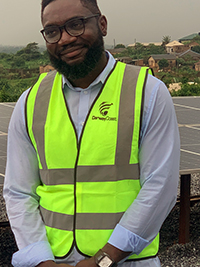
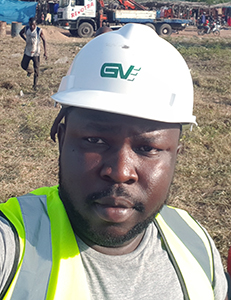
Today, we are proud to highlight the growing impact of Henry Ureh (DCN) and Ifeanyi Orajaka (GVE) in the deployment of solar mini‑grids across Nigeria. Members of one of the earliest cohorts of IEEE Smart Village entrepreneurs, their work exemplifies our guiding principle: Enterprise for Enduring Impact. Their journey began more than a decade ago with early technical and financial support from ISV.
Their enterprises have focused on the design, deployment, and operation of islanded solar mini‑grids — stand‑alone power systems engineered to operate independently of any national transmission network. These systems integrate photovoltaic generation, battery energy storage, power electronics, and local distribution infrastructure to deliver reliable, high‑quality electricity in regions where grid extension is technically infeasible or economically prohibitive. By enabling productive uses of energy such as agro‑processing, cold storage, telecommunications, and small manufacturing, these islanded systems create local economic ecosystems that extend well beyond basic household electrification.
As grid infrastructure expands, many of these systems are now being designed or upgraded as hybrid mini‑grids, capable of operating both autonomously and in coordination with the national grid when interconnection becomes available. Hybrid architectures provide operational flexibility, improve resilience through multiple generation and supply pathways, and protect long‑term asset value by allowing seamless transitions between islanded and grid‑connected modes. This technical foresight has been critical in enabling scalable, finance‑ready projects that can evolve alongside national electrification plans.

Today, their companies are scaling the deployment of solar mini‑grids nationwide, demonstrating how early‑stage technical rigor and business support can catalyze long‑term, large‑scale transformation. An April 2026 press release from the International Finance Corporation (IFC), a member of the World Bank Group, in partnership with the Norwegian Investment Fund (Norfund), names them as leading recipients of major financing to support the development of 109 solar mini‑grids serving approximately 231,000 homes and businesses across Nigeria. The total project cost is $119 million, with $37 million committed by IFC and Norfund.
This milestone represents the distillation of ISV’s model for growth. We seed‑fund entrepreneurs whose vision is to scale technically robust, commercially viable enterprises capable of serving at least one million people each using capital and resources well beyond ISV. In keeping with ISV’s commitment to multi‑year engagement, we continue to support these leaders as they engage funding sources within Nigeria and internationally, ensuring that early engineering innovation and entrepreneurial discipline mature into enduring, system‑level impact.
Finally, we extend our sincere gratitude to the IEEE Nuclear and Plasma Sciences Society for its sustained leadership and generosity over the past fifteen years. From the earliest days of IEEE Smart Village, NPSS recognized the potential of coupling technical excellence with entrepreneurial action to advance IEEE’s mission of benefit to humanity. The impact now being realized in Nigeria, and increasingly across the Global South, stands as a testament to that foresight. As ISV enters its next phase of growth, continued engagement and support from NPSS will remain vital to ensuring that early-stage innovation, technical rigor, and enterprise development can scale to meet the needs of millions more who still lack access to reliable, sustainable energy and economic opportunity.
Rajan Kapur can be reached at EMAIL