2026 Society Award Winners
I am pleased to report that the 2026 NPSS Society Awards and Grants have been decided. This year we have 13 awardees who were selected by the NPSS Awards Committee representing all eight technical committees of the Society. I would like to congratulate all of these deserving winners and thank the nominators of all candidates, including those who were unsuccessful on this occasion. The pool of nominees was very strong, as usual.
Below you will find the biographies of all 2026 award winners. Please consider nominating a deserving colleague for our 2027 round of awards, which has a deadline of January 31, 2027. All the application forms can be found on the IEEE NPSS web site at https://ieee-npss.org/awards/npss-awards/.
Merit Award

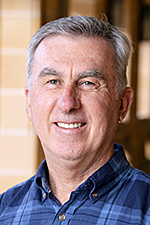
Dr. Craig S. Levin is a Professor of Radiology and, by Courtesy, of Physics, Electrical Engineering, and Bioengineering at Stanford University, U.S.A. He is a founding member of the Molecular Imaging Program at Stanford, Director of the Stanford Center for Innovation in In Vivo Imaging (SCI3), and Principal Investigator and Director of the NIH-NCI funded T32 Stanford Molecular Imaging Scholars (SMIS) Postdoctoral Training Program. He received his M.S., M.Phil, and Ph.D. degrees in Physics from Yale University, and his B.S. in Physics and Mathematics at UCLA. An internationally recognized researcher in the field of molecular imaging, he has over 220 peer-reviewed publications and 40 patents issuedflargest or pending. He directs a 15-member laboratory that explores new concepts in instrumentation and signal processing algorithms for molecular imaging, introduces some of these new tools into clinical and pre-clinical imaging research studies of cancer, heart disease and neurological disorders, and partners with industry to disseminate some of these technologies into products used for patient care throughout the world. To support his research, he has generated numerous grant awards as Principal Investigator from government, industry, and private institutions. In 2007 he lectured in Nobel Symposium #46: Watching Life Through Molecular Imaging. In 2012 he was elected into the American Institute for Medical and Biological Engineering’s College of Fellows and also in 2012 was given the U.S. Academy of Radiology Research Distinguished Investigator Recognition Award. In 2020 he received the Edward J. Hoffman Medical Imaging Scientist award from the IEEE Nuclear and Plasma Sciences Society (NPSS), in 2023 he received the Society of Nuclear Medicine and Molecular Imaging Mars Shot Award, and in 2024 he received the Japanese Society for the Promotion of Science (JSPS) Invitation Fellowship.
Dr. Levin’s citation for the 2026 NPSS Merit Award reads: “For contributions to the pioneering of molecular imaging sciences and nuclear medicine physics, including advancements in radiation detector technologies and their impactful implementation in patient care.”
Richard F. Shea Distinguished Member Award
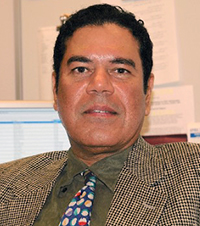
Professor Ahmed Hassanein has been selected to receive the 2026 IEEE Nuclear and Plasma Sciences Society (NPSS) Richard F. Shea Distinguished Member Award, marking his fourth major international award. This prestigious award honors individuals for outstanding leadership, service, and technical contributions to the IEEE NPSS and to the broader fields of nuclear and plasma sciences. The selection criteria include demonstrated excellence in leadership roles, impactful contributions to society activities, sustained service and dedication, and significant technical achievements.
Dr. Hassanein was the General Chair of the 38th IEEE International Conference on Plasma Science (ICOPS-2011), June 26-30, Chicago, USA, one of the IEEE largest international plasma science conferences. Dr. Hassanein sponsored a reception event for “Women in Science and Engineering” to highlight the significant contributions of women in IEEE related research areas. He also was the Guest Editor of IEEE Transactions on Plasma Science. IEEE Transactions on Plasma Science (Volume: 40, Issue: 5, May 2012). He was elevated to IEEE Fellow position in 2012 for contributions to modeling and simulation of fusion, laser, and discharge produced plasmas. Hassanein’s work is recognized internationally as among the best worldwide in these areas in both high-end computer simulation as well as state-of-the art experimental facilities. He contributed to several IEEE committees including IEEE Fellow Evaluation Committee member, IEEE Senior Member Applications Review Panel, IEEE Cohort Fellow Evaluation Committee.
Professor Ahmed Hassanein is the Paul L. Wattelet Endowed Chair and Distinguished Professor of Nuclear Engineering at Purdue University, and Director of the Center for Materials under Extreme Environment (CMUXE) within the College of Engineering. He brings over 45 years of distinguished experience in nuclear and plasma physics, computational science, and materials research.
He is internationally recognized as a leading authority in modeling and experimental benchmarking of materials under extreme conditions, including exposure to photons, electrons, plasmas, ion beams, and laser irradiation. Under his leadership, the CMUXE team has developed advanced computational tools—most notably the HEIGHTS multi-physics simulation package—alongside state-of-the-art experimental facilities. These capabilities enable predictive understanding of materials behavior, plasma evolution, hydrodynamics, and lifetime performance under extreme environments.
Professor Hassanein’s work has had broad impact across multiple disciplines, including magnetic and inertial fusion energy, high-energy physics, national security applications, and extreme ultraviolet (EUV) nanolithography. His research contributions have been widely adopted in both national and international programs.
He has authored more than 600 publications and technical reports across over 45 journals spanning physics, materials science, bioengineering, and computational modeling. Prior to joining Purdue University, he held senior leadership roles at Argonne National Laboratory, including serving as Director of the U.S. Department of Energy Fusion Power Program.
Professor Hassanein is also an inventor with multiple patents in nanolithography and advanced materials technologies. His previous international honors include:
- IEEE NPSS Merit Award (2013) – the society’s highest technical achievement award
- IEEE Charles K. Birdsall Award (2019) – for seminal contributions to computational nuclear and plasma sciences
- American Nuclear Society Outstanding Achievement Award (2020) – for leadership and innovation in magnetic and inertial fusion research
He is a Fellow of eight major professional societies, including IEEE, the American Nuclear Society (ANS), the American Physical Society (APS), Optica (formerly OSA), the Institute of Physics (IOP), the American Association for the Advancement of Science (AAAS), SPIE, and IAAM. This latest recognition further underscores Professor Hassanein’s global leadership and lasting impact in advancing nuclear and plasma sciences.
His citation reads: “For outstanding contributions and leadership to IEEE Nuclear and Plasma Sciences Society various committees and his extensive technical contributions to the fundamental understanding and applied use of nuclear fusion, laser, and discharge plasma in various applications.”
Early Achievement Award
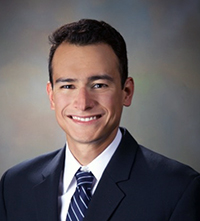
Daniel E. Ruiz received his B.S. degree in Physics Engineering from the Instituto Tecnológico de Estudios Superiores de Monterrey (ITESM) in Monterrey, Mexico in 2010. He then attended the École Polytechnique in Palaiseau, France and the Institute National des Sciences et Techniques Nucléaires (INSTN) in Saclay, France, where he obtained his M.S. degree in Nuclear Reactor Physics and Engineering. After completing his studies abroad, he moved to Princeton, NJ in 2012 to pursue his doctoral degree in Plasma Physics at Princeton University. He obtained his M.A. and Ph.D. degrees in 2014 and 2017, respectively. The main topic of his dissertation was the development of a new approach based on variational principles to describe the dynamics of linear and nonlinear waves in plasmas.
In 2017, Daniel joined Sandia National Laboratories as a Harry S. Truman Fellow. In 2020, he became a staff member. Since joining Sandia, Daniel’s main research interests are Z-pinch physics, magneto inertial fusion, similarity scaling of Sandia’s Magnetized Liner Inertial Fusion (MagLIF) platform, and nonlinear dynamics of hydrodynamical instabilities, such as the Rayleigh-Taylor and Richtmyer-Meshkov instabilities. Daniel shares leadership responsibilities with principal experimenters for the successful design, execution, and analysis of Z-machine experiments. To date, Daniel has designed and led over 40 recorded shots on the Z machine. The data and analyses of these experiments have led to critical new insights and contributions to the long-term goal of achieving high fusion yield (Y>200 megajoules) in the laboratory. For his contributions, Daniel was honored with the Presidential Early Career Award for Scientists and Engineers (PECASE) in 2025 and the NPSS Early Career Award in 2026.
His citation reads “For exceptional scientific leadership and technical contributions to the theoretical scaling and assessment of magneto inertial fusion to achieve high fusion yields in the laboratory, and for his commitment and service towards community outreach and student mentoring.”
NPSS Graduate Scholarship Award

Ms. Yoni Xiong is a Senior Research Engineer at Sandia National Laboratories. Her research focus at Sandia National Laboratories is on the resilience of microelectronics for national security. Currently, Yoni is actively engaged in investigating radiation effects and reliability in advanced technology nodes. With the rapid advancement of semiconductor technology, the shrinking dimensions of transistors and the adoption of new transistor architectures pose new challenges in terms of their susceptibility to radiation-induced effects. Yoni’s research focuses on understanding the impact of radiation on the performance and reliability of cutting-edge FinFET and GAA devices. Her research involves rigorous experimentation, data analysis, and simulation techniques to comprehensively characterize and model the response of the advanced bulk FinFET and GAA nodes to different types of radiation exposures.
She received her Ph.D. in Electrical Engineering from Vanderbilt University in 2025. She was a Department of Energy (DOE) National Nuclear Security Administration (NNSA) Stockpile Stewardship Graduate Fellow from 2021-2025. She served as the chair of the IEEE NPSS Vanderbilt University chapter from 2022-2025. In addition to the NPSS Graduate Scholarship Award, Ms. Xiong has been awarded the IEEE NPSS 2023 Paul Phelps Award, IEEE Nuclear & Space Radiation Effects Conference (NSREC) 2024 and 2022 Outstanding Student Paper Award, IEEE NSREC 2023 Meritorious Paper Award, IEEE International Reliability Physics Symposium (IRPS) 2023 Best Oral Presentation Award, and the IEEE IRPS 2023 People’s Choice Award for Best Poster. She was the recipient of Cornelius Vanderbilt merit scholarship for her undergraduate studies at Vanderbilt University where she graduated with the highest honors and received the Electrical Engineering Department Program Award. Yoni also has industry experience at Northrop Grumman and Cisco Systems. She has published 34 papers and given 42 presentations at IEEE international conferences. Outside of research, she enjoys a variety of racket sports, fiber arts, and painting.
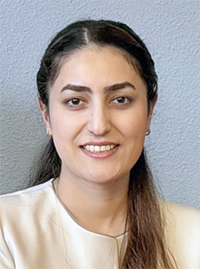
Samaneh Mostafapour is a postdoctoral researcher in Medical Imaging at the University Medical Center Groningen (UMCG), the Netherlands. Her work focuses on PET/CT imaging, ultra-low-dose CT protocol optimization, quantitative imaging, and artificial intelligence applications for medical image enhancement and reconstruction in long axial field-of-view (LAFOV) PET/CT systems.
She recently completed her Ph.D research in Medical Imaging at the University of Groningen and UMCG and is currently awaiting her doctoral defense. Her dissertation investigated ultra-low-dose CT for PET attenuation correction and AI-based CT denoising methods, with the aim of reducing radiation exposure while preserving quantitative accuracy and image quality. During her Ph.D, she collaborated with clinicians, physicists, and technologists on imaging optimization and quantitative analysis projects using both phantom and patient datasets.
Samaneh obtained her bachelor’s degree in Radiology Technology from Mashhad University of Medical Sciences, Iran, and later completed an MSc in Medical Physics. Alongside her research activities, she gained practical experience in radiography, CT, MRI, PET/CT, and SPECT/CT imaging workflows as a radiology technologist.
Before joining UMCG, she worked as a lecturer and research assistant at Mashhad University of Medical Sciences, where she supervised physics laboratory sessions, clinical internships, and undergraduate student research projects in radiology technology. During her Ph.D, she also supervised BSc and MSc students working on medical imaging and image analysis projects.
She has authored and co-authored multiple scientific publications in nuclear medicine and medical imaging and has presented her work at several international conferences. In 2026, she received the IEEE Nuclear and Plasma Sciences Society (NPSS) Graduate Scholarship Award in recognition of her contributions to imaging science and nuclear medicine research. She also received the Alavi–Mandell Award from the Journal of Nuclear Medicine for her first-author work on ultra-low-dose CT and PET quantification.
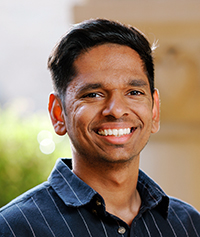
Ashwyn Sam is a plasma physicist specializing in fusion energy, space plasmas, and kinetic/MHD plasma modeling. He received his M.S. and Ph.D. in Aeronautics & Astronautics from Stanford University as a Knight-Hennessy Scholar, following dual B.S. degrees in Mechanical Engineering and Mathematics from the University of Tennessee, Chattanooga.
Ashwyn’s Ph.D. research focused on modeling space environment plasmas and investigating plasma-based methods for orbital debris detection in low Earth orbit. Using fully kinetic particle-in-cell (PIC) simulations, his work studied nonlinear plasma waves, ion-acoustic solitons, wave-particle interactions, and spacecraft/debris charging phenomena in collisionless plasmas. His research demonstrated the important role of kinetic effects such as electron trapping and ion Landau damping in soliton formation and evolution.
In parallel with his space plasma research, Ashwyn worked on magnetized inertial fusion research using radiation-MHD code. He developed and implemented an anisotropic Braginskii viscosity model for Magnetized Liner Inertial Fusion (MagLIF) simulations, improving the modeling of magnetized plasma transport and viscous heating effects in fusion plasmas.
Ashwyn previously served as a Computational Physicist Intern at Pacific Fusion and currently works there as a Target Design Physicist.
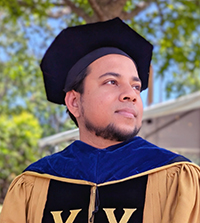
Dr. Sajal Islam is a Postdoctoral Fellow at the Indiana University Center for Reliable and Trusted Electronics (IU CREATE). He earned his Ph.D. in Interdisciplinary Materials Science at Vanderbilt University in 2026, an M.S. in Materials Science from Missouri State University in 2021, and a B.S. in Electrical and Electronic Engineering from Primeasia University.
Dr. Islam’s research expertise lies in wide bandgap semiconductor technologies, including SiC, GaN, and β-Ga₂O₃ power devices. His work investigates radiation-induced failure mechanisms, including single-event burnout (SEB), single-event leakage current (SELC), total ionizing dose (TID), and related reliability challenges in electronics intended for radiation-intensive environments. His research integrates semiconductor device physics, radiation testing, materials characterization, and AI-assisted reliability analysis to advance resilient next-generation electronic technologies.
At Vanderbilt University, Dr. Islam contributed to multiple federally funded research programs supported by NASA, the U.S. Air Force, and other agencies, conducting radiation testing using heavy ions, proton irradiation, and X-ray facilities. Currently at Indiana University, Dr. Islam is involved in projects focused on radiation effects on highly scaled CMOS technologies, AI-driven modeling, system-level reliability, and radiation hardness assurance for advanced electronic systems operating in radiation-intensive environments.
Dr. Islam has authored and co-authored numerous peer-reviewed publications in journals including IEEE Transactions on Nuclear Science and Applied Physics Letters, with research contributions spanning semiconductor reliability, radiation effects, and device engineering. His work has been recognized through several awards, including Vanderbilt University’s “Anchor Award 2024 in Research Excellence”. In addition to research, he has demonstrated leadership through mentoring, scientific outreach, conference presentations, and student leadership initiatives across interdisciplinary academic communities. His broader research vision focuses on developing radiation-resilient semiconductor and electronic systems for next-generation space and defense applications, integrating advanced device physics, system-level reliability analysis, and AI-driven modeling approaches.
Charles K. Birdsall Award
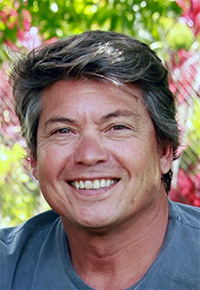
Warren B. Mori is a Distinguished Professor Emeritus in the departments of Physics and Astronomy and of Electrical and Computer Engineering at UCLA. He received his BS from UC Berkeley in 1981, and his M.S. and Ph.D. from UCLA in 1984 and 1987, respectively. He has been at UCLA from 1981 until today. He served as the Director of the UCLA Institute for Digital Research and Education from 2006 until 2021. His current research interests are in advanced computing, particle-in-cell simulations of plasmas, basic plasma physics, high intensity laser and beam plasma interactions, plasma based accelerators and light sources, nonlinear optics of plasmas, inertial fusion science, and high energy density science. He is the coauthor of more than 500 publications on a variety of topics in plasma and computational physics. He is a fellow of both APS (1997) and IEEE (2009) and a current member of both societies.
In 1987 he received the International Center for Theoretical Physics Medal for Excellence in Nonlinear Plasma Physics by a Young Researcher, was the recipient of the Advanced Accelerator Concepts Prize in 2016 for, “ his leadership and pioneering contributions in theory and particle-in-cell code simulations of plasma based particle acceleration”, and in 2020 he received the APS James Clerk Maxwell prize for, “leadership in and pioneering contributions to the theory and kinetic simulations of nonlinear processes in plasma-based acceleration and relativistically intense laser and beam plasma interactions.
In 2026, he received the IEEE Charles K. Birdsall Award from the Nuclear and Plasma Sciences Society, “for contributions to kinetic simulations of plasma-based accelerators and inertial fusion energy, computational algorithm and method development, education and leadership in scientific computing.”
Magne ‘Kris’ Kristiansen Award
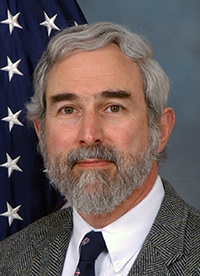
Peter J. Turchi is the recipient of the 2026 NPSS Magne “Kris” Kristiansen Award for experimental nuclear and plasma science. His contributions over sixty years included multi-megampere, multi-megajoule plasma dynamic systems for space propulsion, nuclear weapon simulation and controlled fusion. Dr. Turchi received BSE, MA and Ph.D degrees from Princeton University in 1967, 1969 and 1970, respectively, in aerospace and mechanical sciences. His undergraduate research in the 1960s on large-radius z-pinch implosions at 0.4 MA, under the late Prof. Robert G. Jahn at Princeton, led to the Air Force Shiva program, created in 1971 with fellow officer William L. Baker, for multi-megajoule, prompt sources of soft X-radiation to simulate nuclear weapons. He later returned to this in the 1980’s with the creation of the plasma flow switch to deliver currents above ten megamperes to z-pinch implosion for soft X-radiation and to high speed flow generation of 30 keV plasma of fully-stripped aluminum. During the 1970’s, as a civilian at the Naval Research Laboratory, his work demonstrated the first stabilization of liquid metal implosions for controlled fusion, leading to concepts for strong adiabatic compression of fusion plasma at megagauss field levels. With a continued interest in space exploration, he applied such concepts to the design of advanced space propulsion techniques. Dr. Turchi is a Fellow of the AIAA and a Life Fellow of IEEE, a recipient of the IEEE Erwin Marx Award, the Sakharov Medal, the Pavlovsky Prize and the Megagauss Award. He has served as chair of the IEEE Pulsed Power Science and Technology Committee, President of the Electric Rocket Propulsion Society and a member of the Air Force Scientific Advisory Board. Dr. Turchi notes: “You cannot pursue experiments at megampere levels without the support of many, many others, including Bill Baker, Jim Degnan, Bob Reinovsky and Dick Gullickson.”
Dr. Turchi’s citation reads: “For contributions over sixty years to pulsed power and plasma dynamics at multi-megampere currents and multi-megajoule energies applied to space propulsion, nuclear weapon simulation and controlled fusion.”
Edward J. Hoffman Early Career Development Grant
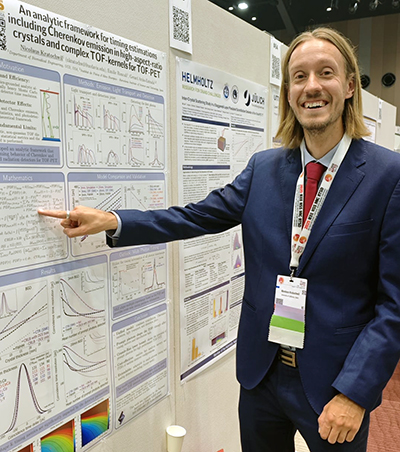
Nicolaus Kratochwil is a postdoctoral researcher in the Department of Biomedical Engineering at the University of California, Davis. He received his Ph.D in Physics in 2023 from the University of Vienna, Austria.
His research advances the development of light-based radiation detectors for medical imaging instrumentation, with applications in positron emission tomography (PET), single photon emission computed tomography (SPECT), and prompt gamma imaging (PGI). He is particularly interested in exploiting Cherenkov luminescence to enable cost-effective and ultra-fast time-of-flight (TOF) PET detectors. He developed an event classification approach that leverages natural fluctuations in detector signals to prioritize well-resolved temporal events in TOF-PET image reconstruction, which has been cited more than 100 times within a few years.
Since his doctoral studies, he has given 20 presentations at international conferences and authored 12 peer-reviewed articles as lead or senior author, in addition to 32 publications as contributing author. He received the 2021 and 2023 Roberts Best Paper Prize in Physics in Medicine & Biology (as co-author), the IEEE Trainee Grant on six occasions, and the V.T. Jordanov Radiation Instrumentation Travel Grant (2023).
He is actively engaged in peer review for instrumentation and medical imaging journals and conferences, having completed more than 50 manuscript reviews and served as abstract reviewer for seven conferences. In addition, he has mentored and supported the career development of approximately ten Ph.D and Master’s students.
His current research aims to establish fundamental statistical limits on the information that can be extracted from radiation detector signals and to develop estimators that approach these bounds. He conceptualizes the radiation detection chain as an information transfer process from radiotracer distribution to reconstructed image, and seeks to identify and mitigate mechanisms of information loss to maximize recoverable information in medical imaging systems.
Outside of physics, he enjoys marathon running and spending time hiking in the mountains.
Dr. Kratochwil’s Hoffman Early Career Development Grant is “in recognition of his outstanding and innovative contributions to medical imaging instrumentation, particularly in the extraction of fast timing from Cherenkov signals in radiation detectors for time-of-flight positron emission tomography (TOF-PET).”
Ronald J. Jaszczak Graduate Award
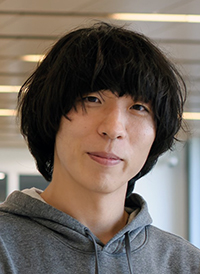
Fumio Hashimoto is a postdoctoral researcher in the J. Crayton Pruitt Family Department of Biomedical Engineering at the University of Florida, USA, working in Dr. Kuang Gong’s lab. He holds a Ph.D. in Engineering (2024) from Chiba University, Japan, where his doctoral research, supervised by Prof. Taiga Yamaya, focused on improving positron emission tomography (PET) image quality using deep image prior. He also received his Bachelor’s (2014) and Master’s (2016) degrees from Fujita Health University, Japan.
Fumio’s research focuses on PET image denoising, reconstruction, and deep learning, with a particular interest in physics-informed approaches for medical imaging. During his time as a researcher at the Central Research Laboratory of Hamamatsu Photonics K.K. and as a visiting collaborative researcher at the National Institutes for Quantum Science and Technology (QST), he worked on a broad range of PET imaging topics, including dynamic PET image denoising, reconstruction, attenuation correction, and detector signal processing. His recent research extends these efforts toward generative AI-based PET image reconstruction.
He has published 36 peer-reviewed journal papers, including 16 as first author, in journals such as IEEE Transactions on Medical Imaging, IEEE Transactions on Radiation and Plasma Medical Sciences, and Physics in Medicine & Biology. He also contributes to graduate education by mentoring Ph.D. students in PET image reconstruction.
This grant is in recognition of Fumio’s work on “advancing PET image reconstruction and denoising through combining PET imaging physics with state-of-the-art AI methods, with a focus on quantitative rigor and translational relevance.”
Glenn F. Knoll Graduate Educational Grant
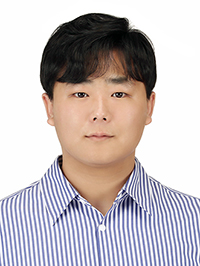
Hyeong Seok Shim is a postdoctoral researcher in Prof. Geun Bae Ko’s laboratory at the Korea Advanced Institute of Science and Technology (KAIST). He received his B.S. degree in Electrical and Computer Engineering from Seoul National University in 2020, and his Ph.D. in Biomedical Engineering from the same institution in 2026 under the supervision of Prof. Jae Sung Lee.
His doctoral research pursued two complementary directions aimed at improving the sensitivity and quantitative accuracy of PET detectors. The first was the recovery of inter-crystal scatter (ICS) events, which are conventionally discarded despite carrying substantial useful information about annihilation locations. He developed a stochastic conditional-probability framework for ICS event positioning, in which the most probable interaction crystal is inferred from prior distributions conditioned on measurable detector signals. The framework was validated with GATE Monte Carlo simulation of LYSO crystal arrays across multiple conditioning variables and binning strategies, demonstrating clear improvements in positioning accuracy over conventional energy-weighted approaches.
His second doctoral research direction was depth-of-interaction (DOI) encoding. He investigated detector geometries with dual-ended SiPM readout, including meta-scintillator designs combining fast and slow scintillator segments, to extract DOI information that directly improves spatial resolution and mitigates parallax error in PET imaging. Together, the ICS and DOI threads aimed at more complete utilization of the physical information already present in scintillation detectors.
During his Ph.D., he spent six months as a visiting scholar in Prof. Craig Levin’s laboratory at Stanford University, an experience that profoundly shaped his approach to detector hardware and system-level evaluation. He has authored multiple SCIE-indexed publications and is co-inventor on a patent in scintillator detector technology. At KAIST, he is now extending these themes into PET detector timing analysis and correction methodologies.
Hyeong Seok Shim will use the grant “to support travel and attendance at [2026 IEEE Nuclear Science Symposium and Medical Imaging Conference (IEEE NSS/MIC), Granada, Spain] and [FTMI-TBPET-PSMR / Valencia, Spain], including participation in short courses and workshops that are directly aligned with my research direction.”
Glenn F. Knoll Post Doctoral Educational Grant
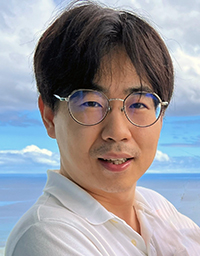
Dr. Han Gyu Kang is a Senior Researcher at the National Institutes for Quantum Science and Technology (QST) in Japan. He obtained his BS (2012), M.S (2014), and Ph.D. (2018) degrees at Eulji University in South Korea under the supervision of Prof. Seong Jong Hong. In Korea, Dr. Kang’s research focused on SiPM-based PET/MRI systems and optical/gamma hybrid laparoscope, which led him to win the presidential prize from Eulji University twice (2016, 2017) and the award from the Deputy Prime Minister of Korea (2019).
Since 2018, Dr. Kang has joined Yamaya-Lab at QST in Japan. In 2023, Dr. Kang developed a submillimeter-resolution PET system that achieved 0.55 mm resolution for mouse brain imaging (2023 JNM), which led him to win the IEEE Bruce Hasegawa Young Investigator Award and Edward J. Hoffman Early Career Development Grant in 2023. In 2025, Dr. Kang developed three different novel preclinical PET systems: 1) Sub-0.5 mm resolution PET (2025 IEEE TMI) that achieved 0.45 mm resolution, 2) Total-body small-animal PET that enabled sub-second dynamic rat imaging (2025 PMB), and 3) Two-photon/PET hybrid imaging system for neuroscience research (2025 PMB). Dr. Kang developed these PET systems from simulation to prototyping including front-end electronics and gantry designs. The Glenn F. Knoll Post Doctoral Education Grant will greatly promote a new research topic about sub-0.5 mm resolution and sub-second dynamic preclinical PET.
Since 2013, Dr. Kang has contributed to the IEEE MIC (10 orals, 28 posters), the GATE meeting (7 talks), and the STIR meeting (1 talk) as the first presenter. Dr. Kang has 44 peer-reviewed publications (21 first authors, 3 corresponding authors, and 20 co-authors) and a book chapter, including six patents. Currently, Dr. Kang is focusing on pushing the fundamental limit of PET resolution under 0.2 mm with quantum technology to revolutionize molecular neuroimaging research.
Han Gyu Kang will use his grant “for attending 2026 IEEE Nuclear Science Symposium/Medical Imaging Conference (NSS/MIC) at Granada, to present initial results from research on sub-0.5 mm resolution and sub-second temporal resolution PET.”
Steve Meikle, IEEE NPSS Awards Chair, can be reached by e-mail at [email protected]