Radiation Effects News Annual Report, December 2025

The IEEE Radiation Effects Committee (REC) held its annual Open Meeting on July 17th at the 2025 Nuclear and Space Radiation Effects Conference (NSREC). The meeting was chaired by Kay Chesnut, RESG Chair. Presentations were given by the general chairs of the 2025 and 2026 NSRECs as well as the chairs of the 2025 and 2026 European Conference on Radiation and its Effects on Components and Systems (RADECS).
Kay opened the meeting by recognizing this year’s awards, and also introduced newly elected and appointed members of the Radiation Effects Steering Group (RESG) which guides development of future conferences. The elected members of the 2025 RESG are Heather Quinn, AFRL, Vice Chair; Robert Reed, Vanderbilt University, Past Chair; Elizabeth Auden, LANL, Secretary. Kay recognized Megan Casey, BAE Systems, as an outgoing member of the RESG. Laurent Artola will take over as Senior Member-at-Large and Justin Likar will take over as Member-at-Large. An election was held to determine the new Junior Member-at-Large; George Tzintzarov, Aerospace Corp., was elected. Kay also recognized the elected members of the IEEE NPSS AdCom: Marty Shaneyfelt, Sandia (ret.). (term ends in 2027) and Philippe Paillet, CEA (term ends in 2026).
Kay announced the general chairs for future NSREC Conferences: Philippe Paillet, CEA, 2026, Jonny Pellish, NASA, 2027, Pascale Gouker, MIT/LL, 2028 and Brian Sierawski, Vanderbilt University, 2029.
Dolores Black, Sandia National Lab, the General Chair of the 2025 Conference, summarized statistics of this year’s conference. A total of 411 people registered for the technical sessions and 252 people registered for the short course. The NSREC 2025 was held in person from July 14th – 20th at the Renaissance Hotel, Nashville, Tennessee. The technical sessions featured 134 papers that were presented during the five-day conference: 35 oral presentations, 54 poster presentations, and 45 poster presentations in the Radiation Effects Data Workshop. Four tutorial presentations were given at the Short Course, held July 14th.
Philippe Paillet, General Chair of the 2026 Conference, discussed his plans for the 2025 Conference that will take place in San Juan, Puerto Rico, at the Puerto Rico Convention Center, on July 20th – 24th, 2026. The conference will feature a technical program with 10 sessions of contributed papers that will describe the latest observations and research results in radiation effects. The program will include oral and poster papers, with a separate dedicated poster session where authors of poster papers can discuss their results with conference attendees. A Radiation Effects Data Workshop and an Industrial Exhibit will be held. Attendees will also be able to participate in a one-day Short Course on Monday, July 20th where an outstanding group of technical experts will provide an in-depth discussion of Radiation Hardness Assurance for New Space Missions and Advanced Electronics: Challenges, Risks and Approaches for Success.
The most current information about the Nuclear and Space Radiation Effects Conference, including contact information and paper submission requirements, can be obtained on the new NSREC website: www.nsrec.com.
Kay Chesnut, Executive Chair of the Radiation Effects Committee, can be reached by e-mail at [email protected].
Nominations for 2026 Awards
Nominations are due January 23, 2026, for awards that will be presented at the IEEE NSREC 2026 Conference, July 20-24, in San Juan, Puerto Rico.
Radiation Effects Award Nominations
Nominations are currently being accepted for the 2026 IEEE Nuclear and Plasma Sciences Society (NPSS) Radiation Effects Award. The purpose of the award is to recognize individuals who have had a sustained history of outstanding and innovative technical and/or leadership contributions to the radiation effects community. The $3000 cash award and plaque will be presented at NSREC San Juan, Puerto Rico. Forms are available electronically at http://ieee-npss.org/technical-committees/radiation-effects and must be submitted by January 23, 2026. Additional information can be obtained from Laurent Artola, Senior Member-at-Large, ONERA, for the Radiation Effects Steering Group. Laurent can be reached at [email protected]
Radiation Effects Early Achievement Award Nominations
Nominations are currently being accepted for the 2026 Radiation Effects Early Achievement Award. The purpose of this award is to recognize an individual early in his or her career whose technical contributions and leadership have had a significant impact on the field of radiation effects. The $1500 cash award and plaque will be presented at NSREC San Juan, Puerto Rico. Forms are available electronically at http://ieee-npss.org/technical-committees/radiation-effects and must be submitted by January 23, 2026. Additional information can be obtained from Laurent Artola, Senior Member-at-Large, ONERA, for the Radiation Effects Steering Group. Laurent can be reached at [email protected]
Paul Phelps Continuing Education Grant Nominations
Nominations are currently being accepted for the 2026 Paul Phelps Continuing Education Grant. The purpose of the grant is to promote continuing education (attendance at the 2026 NSREC Short Course) and encourage membership in NPSS. Outstanding members of NPSS who are either Student Members, Post-Doctoral Fellows or Research Associates, or unemployed members needing assistance in changing career direction can be nominated for the award. The actual amount of the grant will be determined prior to the 2026 NSREC in San Juan, Puerto Rico. Funds are to be used towards covering travel costs to attend the NSREC Short Course. The grant also provides complimentary short course registration. Nomination forms are available electronically at http://ieee-npss.org/technical-committees/radiation-effects and must be submitted by January 23, 2026. Additional information can be obtained from Justin Likar. Justin can be reached at [email protected]
NSREC 2026 Short Course, San Juan, Puerto Rico
The Short Course Chair is Pascale Gouker, MIT-Lincoln Lab. The theme is: Radiation Hardness Assurance for New Space Missions and Advanced Electronics: Challenges, Risks and Approaches for Success
Presentations and speakers for the four sessions are:
- Applications of the Natural Space Environment to Heavy Ion Single Event Effects Testing, Justin Likar of Johns Hopkins University Applied Physics Laboratory
- Single Event Effects Upset Rate Analysis for Devices and Systems, Dr. David Hansen of L3Harris
- Radiation Hardness Assurance Implementations in the European Space Agency (ESA) Projects, Cristina Plettner of the European Space Research and Technology Center
- Radiation Hardness Assurance Through System-level Testing for Commercial Space, Dr. Andrea Coronetti of The Exploration Company
2025 Awards
2025 IEEE/NPSS Radiation Effects Award
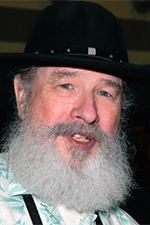
For significant contributions to radiation testing, mitigation strategies, and use of devices and integrated circuits in space.
Gary M. Swift has spent the last twenty-five plus years going to accelerators and testing electrical components for their suitability for use in space radiation environments. Gary received a B.S. in Engineering Physics from the University of Oklahoma in 1975 and did graduate work in Nuclear Engineering at the University of Illinois at Urbana-Champaign. After almost two decades at NASA’s Jet Propulsion Laboratory in Pasadena, he “retired” as a principal engineer in 2007, and moved to Xilinx, Inc. to help develop and test their space-worthy FPGAs. Currently, Gary is the Principal Engineer at the independent consulting firm Swift Engineering and Radiation Services, LLC which he founded, specializing in best-practice SEE testing of complex ICs such as FPGAs and microprocessors. He has publications on a broad range of radiation effects testing including total dose and displacement damage and many single-event effects; for example, in 1992, he coined the now widely used term SEFI. He is co-author on two papers that received the NSREC Outstanding Paper Award (in 1999 and 2015). Back in 2001, Gary, then at JPL, and Carl Carmichael of Xilinx started the Xilinx Radiation Test Consortium, a voluntary group of national labs, universities and aerospace companies that collaborate on SEE testing, and he has served as the XRTC main test coordinator and weekly telecom moderator to the present day.
2025 IEEE/NPSS Radiation Effects Early Achievement Award

For contributions to the understanding of degradation mechanisms induced by total ionizing dose in CMOS devices fabricated with advanced technology nodes, in particular, at ultra-high radiation doses.
Stefano Bonaldo (Member, IEEE) received the M.Sc. degree in electronic engineering and the Ph.D. degree in information engineering from the University of Padova, Padua, Italy, in 2016 and 2020, respectively. He was a Ph.D. Visitor Student with Vanderbilt University, Nashville, TN, USA, for one year. Since 2020, he has been a Postdoctoral Researcher with the Department of Information Engineering, University of Padova. His research interests include the development of innovative electrochemical biosensors and their electrical modeling with applications in the medical and agrifood sectors, and the exploration of radiation effects in ultra-scaled CMOS technologies for space and high-energy physics applications.
2025 IEEE/NPSS Radiation Effects Award for Exemplary Service to Meetings & Conferences

For over 25 years of leadership and unwavering dedication to the IEEE Nuclear and Space Radiation Effects Conference, by providing outstanding audio/visual support to every presenter and for innovations that elevated the quality and clarity of scientific presentations at the Radiation Effects Data Workshop.
Martha O’Bryan is a Lead Technical Writer/Editor in the Radiation Effects and Analysis Group (REAG) at NASA Goddard Space Flight Center as a contractor with Columbus Technologies and Services, Inc. Prior to joining REAG in 1996, she was a technical writer for the Laboratory of Extraterrestrial Physics at NASA Goddard Space Flight Center as a contractor with Hughes STX. She has provided both audio/visual and administrative support for 5 major technical interchange meetings and workshops on behalf of NASA, and in support of continued collaborations with industry, government, and academia in the space community. These include the Spacecraft Anomalies and Failures (SCAF) Workshop, the Hardened Electronics and Radiation Technology (HEART) Conference, Single Event Effects (SEE) Symposium & Military and Aerospace Programmable Logic Devices (MAPLD) Combined Workshop, IEEE Nuclear and Space Radiation Effects Conference (NSREC), and the NASA Electronics Parts & Packaging (NEPP) Electronics Technology Workshop (ETW). She has published 24 Radiation Effects Data Workshop (REDW) papers at NSREC and has received 12 outstanding REDW presentation awards for the following years: 1999, 2000, 2001, 2002, 2007, 2009, 2010, 2014, 2016, 2018, 2023, 2024.
Michael Campola, NSREC Vice Chair for Publicity, can be reached by E-mail at [email protected]