RADECS 2026 Conference Is Coming to Prague
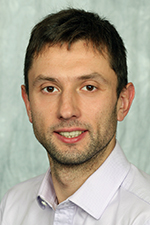
The general chairs, Benedikt Bergmann (Czech Technical University in Prague) and Julien Mekki (CNES), invite you to Prague for the RADECS (RADiation and its Effects on Components and Systems) conference, an annual international scientific and industrial forum on radiation and its effects on electronics and photonic materials, devices, circuits, sensors and systems. It takes place every year in a European venue and attracts hundreds of scientists, engineers and industry representatives from all over the world. In 2026, it is organized by the Institute of Experimental and Applied Physics (CTU in Prague) on behalf of the RADECS Association and technically co-sponsored by IEEE-NPSS.
~ Franz Kafka
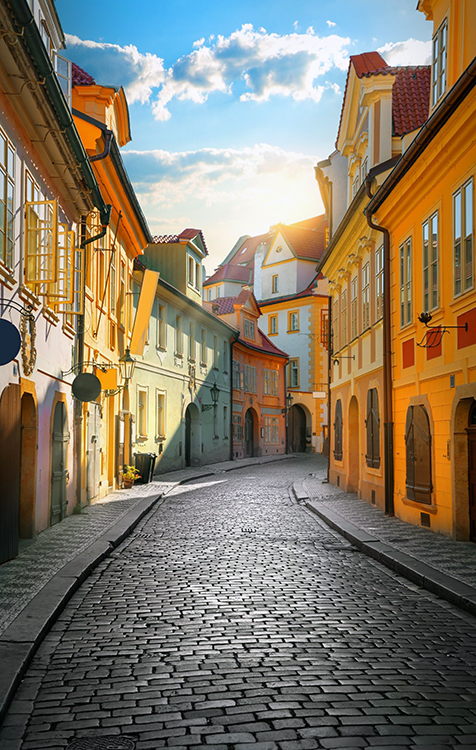
Prague, the capital of the Czech Republic, is often described as the “heart of Europe” for its rich cultural heritage and enduring beauty. Its diverse architectural styles – from Gothic and Baroque to Art Nouveau and modern design – have been remarkably preserved over the centuries. Visitors will experience a unique blend of history and innovation: from the majestic Prague Castle, the World’s largest ancient castle complex, to the Dancing House, representing contemporary architecture.
Besides its captivating sights, the city of Prague has become a vibrant meeting point between Eastern and Western Europe, attracting international cultural events, major scientific conferences, and film productions such as Mission: Impossible (1996), The Bourne Identity (2002), Casino Royale (2006), and Amadeus (1984). It has been home and inspiration to celebrated authors and composers like Franz Kafka, Wolfgang Amadeus Mozart, Ludwig van Beethoven, and to distinguished scientists such as Johannes Kepler, Tycho Brahe, Christian Doppler, Ernst Mach, and Albert Einstein.
Organizing the RADECS conference in Prague — marking the event’s first occurrence in the Czech Republic in its more than 30-year history — is particularly timely given the country’s reinforced space ambitions under the national initiative Cesta do Vesmíru (“Czech Journey to Space”). This program aims to send a Czech astronaut into orbit and builds upon the country’s prior and significant contributions to human spaceflight and space research beginning in 1978 when Vladimír Remek became the first Czechoslovak, and the first astronaut outside the United States and Soviet Union, to travel into space. Since then, Czech scientists and institutions have played active roles in ESA and NASA missions, contributing to space exploration by pioneering technologies in radiation detection, materials science, and satellite systems.
Conference Overview
The conference will begin on Monday, September 28th, with a one-day thematic workshop titled: “Measuring to Protect Future Missions: The Critical Role of Detection and Novel Dosimetry in Harsh Radiation Environments”. Hosted at the historic Bethlehem Chapel in the very center of Prague, the workshop is organized by Stefania Perrachi (ANSTO) and Giovanni Santin (ESA). It will explore the full spectrum of space radiation monitoring — from simulation to in-orbit measurements — and highlight the importance of accurate, real-time detection and advanced dosimetry to inform radiation protection strategies for future missions beyond Low Earth Orbit. With contributions from current missions as well as insight into next-generation detectors and on-board processing challenges, the sessions will foster discussion on what we measure, how we measure it, and why it matters, for a cohesive approach to interpreting space radiation environment.
Technical and poster sessions as well as the industrial exhibition will take place at the Prague Congress Center. The Technical Program Chairs, Laurent Artola (ONERA) and Christer Fröjdh (Mid Sweden University), and their committee will assemble the technical agenda from abstracts due April 16th, 2026, and from Late-News abstracts submitted by the end of June 2025. The technical chairs look forward to your contributions in the fields:
- Basic Mechanisms
- Radiation Effects in Devices and ICs
- Radiation Effects in Complex Devices and Systems
- Radiation Effects in Photonic Devices
- Single Event Effects in Devices and ICs
- Radiation Hardness Assurance
- Radiation Effects Modeling
- Radiation Hardening by Design
- Radiation Environments
- Dosimetry and Facilities
Papers presented at the RADECS technical sessions can be submitted after the conference for publication in IEEE Transactions on Nuclear Science (TNS), subject to the standard TNS peer review process.
The technical program features a Radiation Effects Data Workshop, which is an additional poster session where radiation effects data on electronics, photonic devices and systems are presented to scientists and engineers, who use electronic devices in radiation environments, and for designers of radiation-hardened or radiation-tolerant systems. Papers describing new simulation capabilities and radiation facilities are welcome.
Industrial Exhibition
In addition to submitted contributions, an integral part of the conference will be an Industrial Exhibition, organized by Teresa Farris (Archon LLC) and Ondrej Betak (Unites a.s.). This three-day exhibition will feature leading companies, agencies and universities specializing in the development and manufacture of electronic devices and systems for space and nuclear environments, modeling and analysis of radiation effects, and radiation testing facilities and equipment. Organizations interested in participating can find further details and exhibitor information at www.radecs2026.org.
Social Program
The scientific program will be complemented by a rich social program to foster networking. The week will begin with a welcome reception on Monday evening at the historic Strahov Monastery, a 12th-century abbey overlooking Prague with a remarkable atmosphere.
On Tuesday, attendees will be invited to an industrial reception held in the exhibition hall, providing an ideal opportunity to meet exhibitors and explore the latest innovations in RadHard integrated circuits, modeling tools, design services, and IC test capabilities. Wednesday will feature the traditional RADECS soccer tournament, conveniently located within walking distance of the conference venue, where players and spectators alike are encouraged to join in the tradition.
The social program’s highlight, the Gala Dinner, will be held at the neo-Renaissance Palace Žofín. Situated on Slovanský Island in the heart of Prague, this venue offers breathtaking views of Prague Castle and the historic riverfront, providing a memorable setting to celebrate.
Conference Committee
- General Chairs – Benedikt Bergmann (Czech Technical University in Prague) & Julien Mekki (CNES)
- Technical Chairs – Laurent Artola (ONERA) & Christer Fröjdh (Mid Sweden University)
- Thematic Workshop Chairs – Giovanni Santin (ESA) & Stefania Perrachi (ANSTO)
- Communications – Martin Tyburec, Advacam s.r.o
- Industrial Exhibit Chairs – Teresa Farris (Archon LLC) & Ondrej Betak (Unites a.s.)
- Awards Chairs – Stefano Bonaldo (University of Padova) & Pierre Maillard (AMD)
The general chairs and the conference committee look forward to welcoming you in Prague in 2026. Please visit www.radecs2026.org for the latest updates on the conference and sign up for the newsletter.
Benedikt Bergmann, RADECS general chair, can be reached by email at [email protected]