IEEE NPSS Strengthens Latin American Connections
Highlights from the Winter School at Unam, Mexico

As the second-largest economy in Latin America, Mexico has long established itself as a beacon for promoting scientific cooperation, technology transfer, and building intergovernmental research networks. Recognizing the immense potential to enhance regional scientific capacity, in June 2025, the Transnational Committee of the IEEE Nuclear and Plasma Sciences Society (NPSS TNC) initiated a strategic partnership with the Institute of Physics at the National Autonomous University of Mexico (UNAM) — one of the country’s leading research centers, contributing significantly to its national scientific output.
To realize the commitment of building a direct bridge between local scientists and the global network, a core team of NPSS experts — including Trang Hoang (chair of the NPSS TNC), Martin Grossmann (chair of the Educational Committee), and Andrea Gonzalez-Montoro (newly-appointed chair of the Young Professionals (YP) Committee) — coordinated closely with the local organizing committee. With the active support of Mercedes Rodríguez, current director of the Institute of Physics at UNAM, and Héctor Alva also from the Institute of Physics at UNAM, the “IEEE-NPSS School on Nuclear Instrumentation and Applications for Society” was successfully held from December 3–5, 2025, at the Institute’s campus (https://indico.global/event/15372/).
The Appeal of Academic Diversity
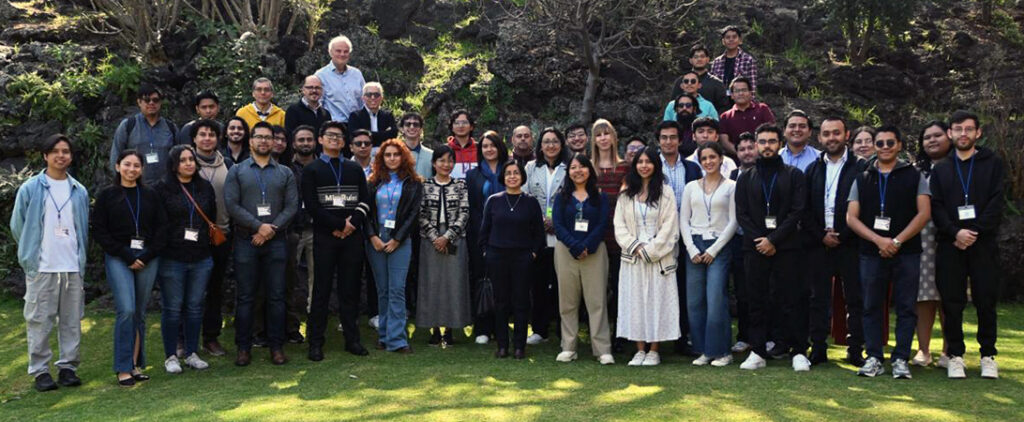
Generously supported by the NPSS Educational Committee (EduCom) and the Early Career Travel Grants, the school successfully selected 39 full participants from a competitive pool of 59 applications. This final cohort comprised 11 women and 28 men, reflecting a strong interest in advanced scientific training. The academic background of these attendees was predominantly postgraduate, with a mix of Master’s and PhD students specializing in Medical Physics, Physics, and Engineering. This academic core was complemented by several practicing professionals, including Radiation Safety Officers and university professors, creating a rich environment for both learning and professional networking.
As the host institution, the National Autonomous University of Mexico (UNAM) played a central role, contributing the majority of the cohort with 24 participants. However, the program effectively reached beyond the host campus, drawing 12 representatives from diverse educational and research centers across Mexico. Notable institutions included the Autonomous University of the State of Mexico (UAEMEX), the University of Guanajuato, and the Universidad Autónoma Metropolitana (UAM), along with attendees from the National Institute of Nuclear Research (ININ), the University of Michoacana, the University of Colima, and the University of Guadalajara. This broad national representation underscores the school’s importance to the wider Mexican scientific community.
The event also demonstrated a commitment to international collaboration, welcoming participants from South America to foster regional dialogue. While the original roster included representatives from Peru, Colombia, and Bolivia, the final international attendance featured scholars from Colombia and Bolivia. To further extend the educational benefits of the program, the organizers admitted an additional group of 15 “listeners” from UNAM, consisting of ten men and five women. This brought the total engagement to 54 individuals, ensuring that the expert knowledge shared during the school had the widest possible impact on the next generation of scientists.
Curriculum: A Balance Between Fundamentals and Practice
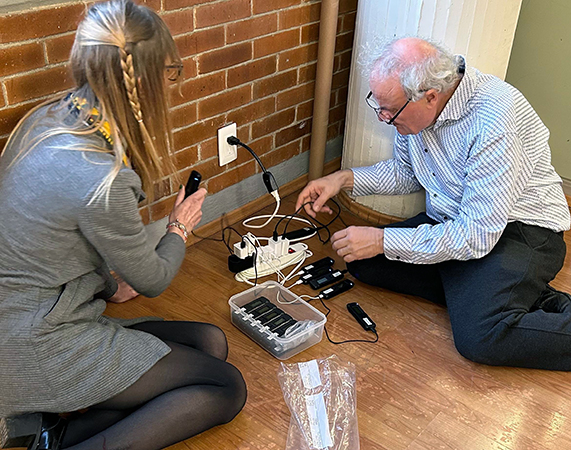
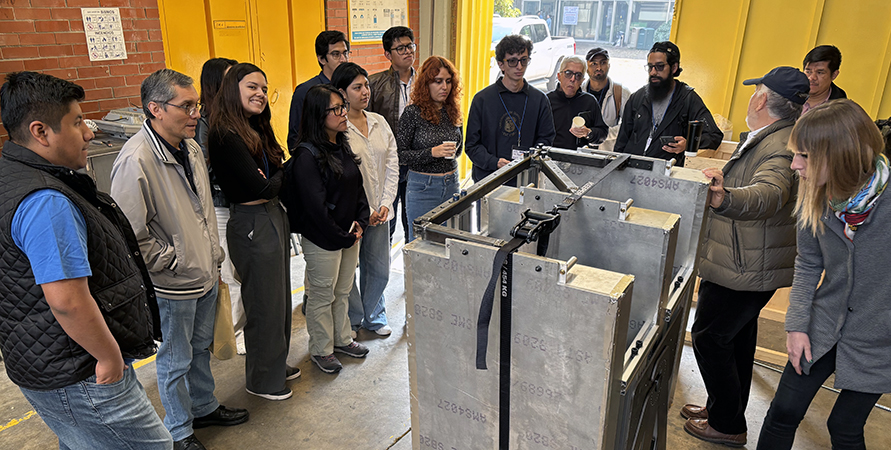
The condensed three-day program was designed to balance theoretical foundations with practical application (hands-on activities) skills. The school began by consolidating fundamental knowledge, where host experts like Mercedes Rodríguez and Héctor Alva presented in-depth on the interaction of radiation with matter and gamma spectroscopy methods using scintillation detectors. Concurrently, NPSS speakers introduced modern perspectives on medical imaging techniques and Monte Carlo simulation methods. A special highlight was the hands-on sessions, where students directly operated RadiaCode dosimeters (https://www.radiacode.com) and ran simulations under the dedicated guidance of the experts.
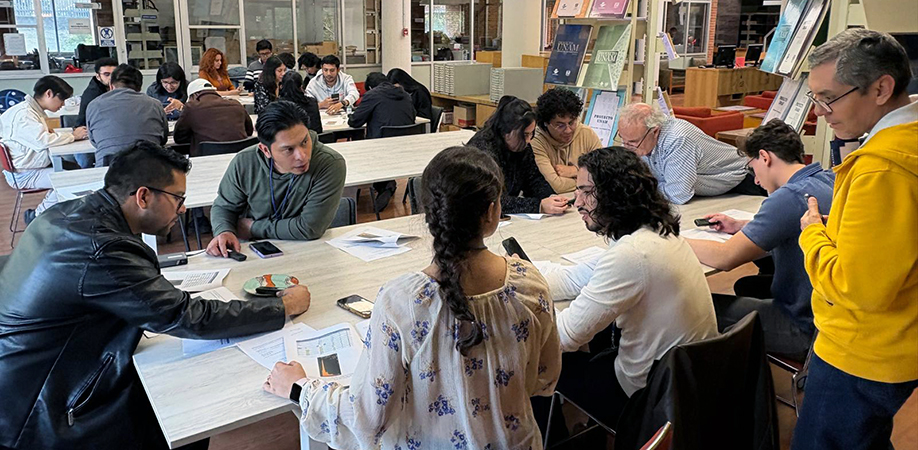
Moving to the second day, the focus shifted to practical applications in medicine and fundamental physics. Students approached current topics such as Nuclear Medicine, the application of Deep Learning in medical image processing, and sensor technology in astroparticle physics. Notably, the colloquium on Proton Therapy by Martin Grossmann attracted significant interest from the scientific community at the Institute of Physics, opening deep discussions on cooperation in medical physics training.
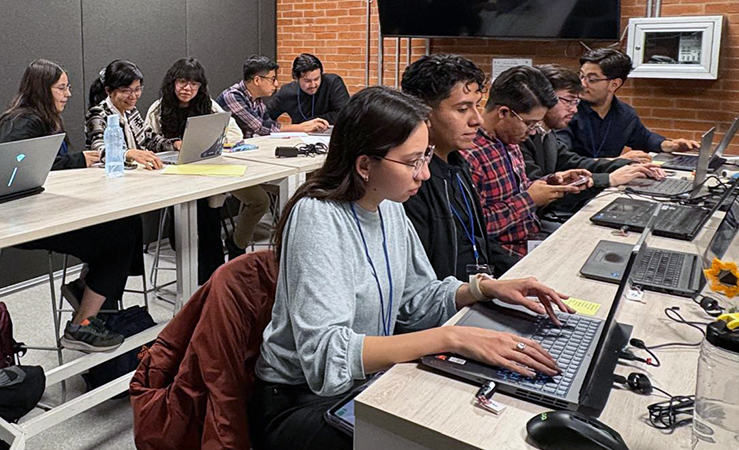
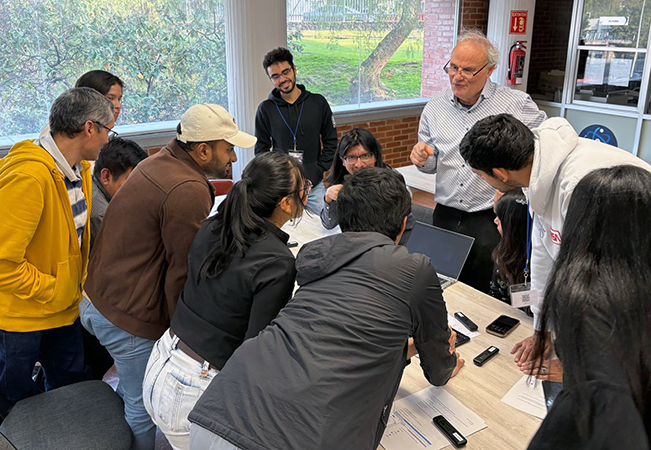
The final day went beyond advanced applications — such as PET imaging and Muon tomography for pyramids — to focus on professional development. Discussions on career paths and opportunities for Young Professionals (YP) created a lively dialogue space. Here, students and young researchers had the opportunity to network directly with international experts, learning about funding sources, scholarships, and career development roadmaps within the IEEE NPSS network.
Expanding Strategic Collaborative Networks
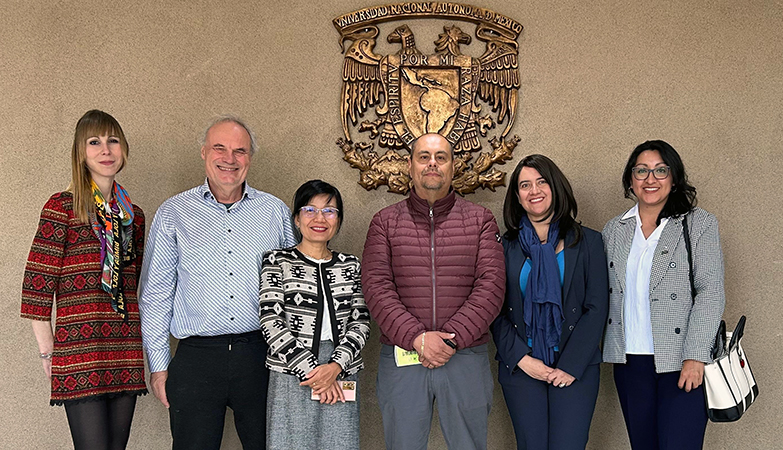
An important highlight on the sidelines of the school was a strategic meeting between representatives of NPSS, the Institute of Physics (UNAM), and the IEEE Mexico Section, led by Citlalli Barrera who attended some lectures. During the meeting, the parties achieved mutual understanding and expressed a keen interest and full commitment to exploring future collaborations, including both the development of a professional chapter and activities that provide tangible benefits to students.
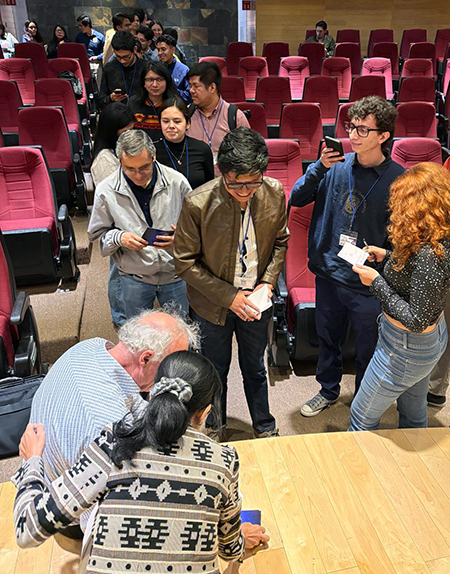
Closing three days of effective work, the program achieved results beyond expectations. The event not only established a sustainable link between the scientific community at UNAM and the global IEEE NPSS network but also ignited passion and charted a clear path for the next generation of scientists in Mexico, affirming the NPSS’s commitment to accompanying the development of the scientific community in the Latin American region.
Trang Hoang can be reached by E-mail at [email protected]